

Wheel Alignment in Alexandria, VA
What Your Vehicle Is Trying to Tell You About Its Alignment
How Do You Know If Your Car Needs Wheel Alignment?
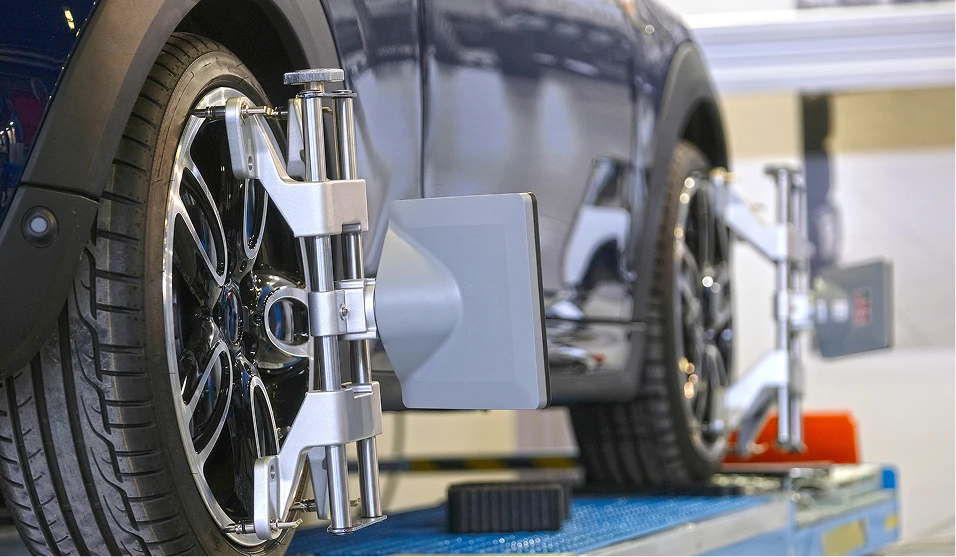
Your vehicle communicates alignment problems in ways that are easy to overlook until they become costly. If your car pulls to one side while driving on a straight, level road, or if your steering wheel sits noticeably off-center even when you are driving straight, those are reliable indicators that your wheel alignment deserves attention. Other warning signs include uneven or rapid tire wear, steering wheel vibration at highway speeds, and squealing tires when turning through a parking lot or intersection. Even if none of these symptoms are obvious yet, recent suspension work, a significant pothole impact, or a minor collision can shift your alignment angles enough to accelerate tire wear without triggering an immediate, noticeable pull. Our technicians use a professional alignment machine to measure your vehicle’s current angles against manufacturer specifications, giving you a clear picture of where things stand before any work is recommended.
FAQs
your questions answered
Most manufacturers and industry professionals recommend having your alignment checked at least once a year or every 12,000 miles, whichever comes first. You should also schedule an alignment check after any significant impact, such as a pothole or curb strike, or following suspension or steering repairs. Costs vary based on your vehicle’s make and model.
Wheel alignment adjusts the angles at which your tires meet the road, correcting issues like pulling and uneven tire wear. Wheel balancing addresses the distribution of weight around each tire and wheel assembly, which typically causes steering wheel vibration at certain speeds. Both services are related but address different problems and are often recommended together.
You can continue driving in most cases, but doing so accelerates tire wear. It can place added stress on your steering and suspension components over time. If your vehicle is pulling severely or the steering feels unstable, having it inspected promptly is the safer choice. Prices for alignment services vary by vehicle make and model.
No. Installing new tires on a vehicle with misaligned wheels will not correct the underlying alignment issue. In fact, new tires installed on a misaligned vehicle will begin wearing unevenly almost immediately, significantly shortening their usable life. An alignment check is always recommended when new tires are installed to protect your investment.
Not always. A front-end alignment adjusts only the front axle angles, while a four-wheel alignment measures and corrects all four wheels, including the thrust angle on vehicles with adjustable rear suspensions. For most modern vehicles, a four-wheel alignment provides a more complete and accurate result and is the service most technicians recommend.